Pages - Menu

▼

Pages

▼

Android 4.4 KIT-KAT soon

android-kit-kat
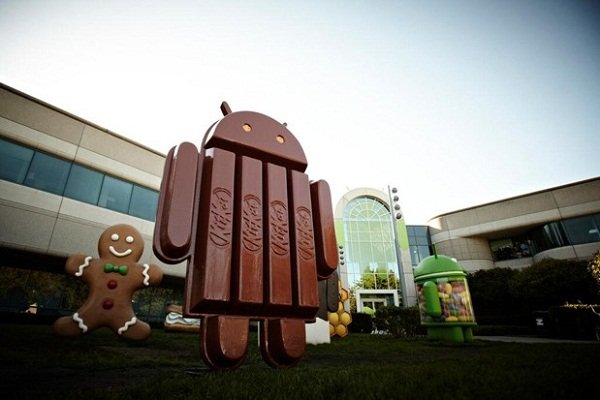
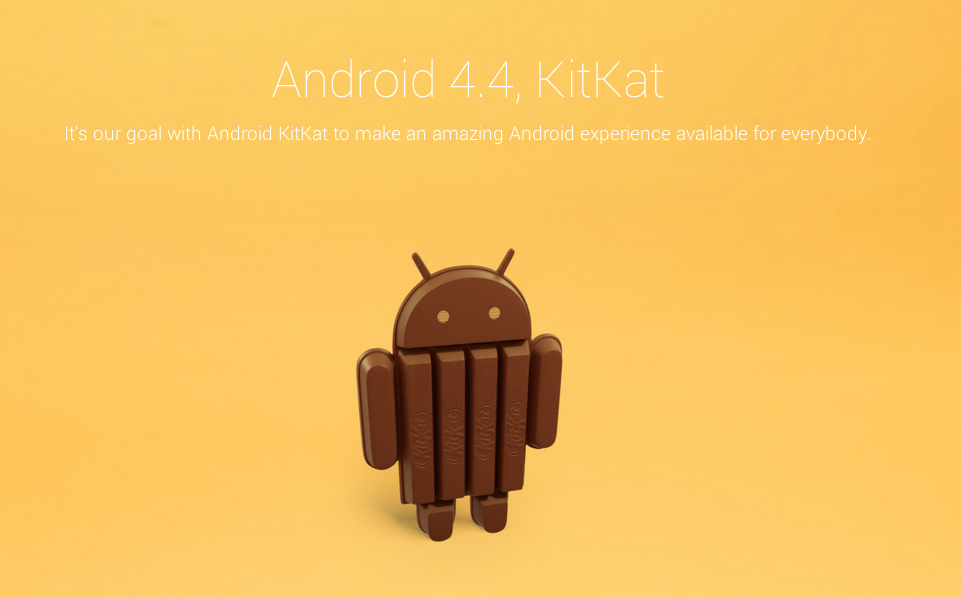
Google's Sundar Pichai, head of both Android and Chrome, has confirmed that the next version of Android will be called Kit-Kat . Yes, you've read correctly, Kit-Kat, as in the trademarked name of the chocolate candy bar made by Nestle (and licensed by Hershey in the US). A splash page for the new operating system reveals that KitKat will be the codename for Android 4.4, not the long-rumored Android 5.0. The name keeps the company's long-standing tradition of naming each version of its mobile operating system after desserts.
To date, Google has internally referred to the release as Key Lime Pie, but the company decided to go for another name after realizing that "very few people actually know the taste of a key lime pie," director of Android partnerships John Lagerling tells the BBC. Late last year, someone suggested naming the upcoming version KitKat — apparently a favorite snack of Android coders — and the company "decided to reach out to the Nestle folks." Within 24 hours an agreement was made, though it's apparently "not a money-changing-hands kind of deal," according to Lagerling.
Screen_shot_2013-09-03_at_12
Google says that "it's our goal with Android KitKat to make an amazing Android experience available for everybody." That's certainly a bit vague, but the statement does line up with earlier rumors that suggested Google plans to use its next Android release in smartwatches, gaming consoles, low-cost smartphones, and even laptops.
Pichai says in a Google+ post that he's just returned from meeting with hardware partners in Asia, and he adds that there are now over 1 billion Android activations. He goes on to say that he "can’t wait to release the next version of the platform that is as sweet as the candy bar that’s one of our team’s favorites." To promote the partnership, a new Willy Wonka-style contest offers buyers of specially-marked KitKat packages a chance to win either a free Nexus 7 or a Google Play credit. If you're really lucky, you might even get a KitKat bar in the shape of an Android robot.

Tensions in syria - The battle begins

Russia criticized the United states on Tuesday for sending warships close to Syria, saying the deployments would exacerbate tension as Washington prepares for a possible military strike.

"The pressure being applied by the United States causes particular concern," Russian Defense Ministry official Oleg Dogayev was quoted as saying by the state-run Itar-Tass news agency.

He said "the dispatch of ships armed with cruise missiles toward Syria's shores has a negative effect on the situation in the region."

Five U.S. destroyers and an amphibious ship are in the Mediterranean, poised for possible cruise missile strikes against Syria, and U.S. officials said the aircraft carrier USS Nimitz and four other ships in its strike group moved into the Red Sea on Monday.

Russia, one of the Syrian government's main arms suppliers, opposes military intervention over an alleged chemical weapons attack in Syria. Moscow is also sending new warships to the Mediterranean but says it is just rotating ships in the area.

All about Apple iphone 5S

The iPhone 5 is beginning to look a little long in the tooth against the rest of the best phones around, so it's no wonder we're hearing a lot of information about a successor. In keeping with Apple's naming convention we've no doubt this will predictably, and rather boringly, be called the iPhone 5S.

The early arrival of the iPad 4 and the iPad mini - just eight months after the release of the iPad 3 in March - has meant that Apple still has the ability to surprise so the mooted release date for the next iPhone is still up for debate.

But it's now almost certain that the iPhone 5S will be accompanied by the cheaper and more fancy-free iPhone 5C (note the use of the word 'cheaper' and not 'cheap'... this is Apple we're talking about here, after all).

iPhone 5C: everything you need to know
Nevertheless it's most likely that the iPhone 5S will hit stores in the latter part of 2013, following the trend set by the iPhone 5 and 4S. It's even possible that Apple will skip the iPhone 5S and hop right on to the iPhone 6, though there is little suggestion that this would be the case.

Apple's past 'S' models have featured the same shell as the core model, though with different features and slightly different tech specs. Once again, it seems that will be the case for the 5S.

The iPhone 5S isn't expected to differentiate itself from the iPhone 5 too drastically, though a better camera and slightly faster processor will surely be part of the package.

One analyst has claimed Apple could use the iPhone 5S to increase its margin for iPhones as a result of falling profitability.

One thing is for sure, with the release of such super handsets as the Samsung Galaxy S4, Sony Xperia Z and HTC One, the next iPhone will have to seriously up its game.

Samsung Galaxy S4 vs Sony Xperia Z vs HTC One vs iPhone 5 vs Lumia 920
Apple will no doubt be feeling the pressure to get its next phone out on the market as soon as possible. Interestingly, it's likely that initial designs of the iPhone 5S will have begun under the watchful eye of Steve Jobs. But is it really as important a product as some suggest?

iPhone 5S release date

A new iPhone from Apple will almost certainly be the 5S rather than an iPhone 6. Many analysts believe we won't see an iPhone 6 until 2014 (although, of course, not everybody agrees with this!).

It's likely that we'll see the iPhone 5S in late 2013, probably around the September/October timeframe. That will pit it up against rival Samsung, who will surely introduce the third generation of the Samsung Note, the Samsung Note 3, at IFA 2013.

But that's not what everybody thinks: many sources claim that full commercial production of the rumored iPhone 5S has begun already. That's borne out by further rumours suggesting that manufacturing began in March, followed by a late-year release.

A discount on the iPhone 5 by US network Verizon also added fuel to the 5S rumours on May 7.

iMore reports in early March pointed to the 5S being out in August 2013, something Digitimes then agreed with in late March 2013. It then came up with the startling revelation that the new handset would appear in Q3 2013 (probably September).

As our own Kate Solomon puts it, "in other news, night to follow day, Tuesday to follow Monday and bears to continue using largely wooded areas to take care of business".

The International Business Times also said in March that production had been delayed to make up ground on the progress made by other handset manufacturers. That wouldn't be at all surprising considering how far behind its rivals the iPhone 5 has fallen - in terms of raw specification, at least.

Reports in April suggested that Foxconn has added as many as 10,000 assembly line workers per week to its Zhengzhou plant as it readies the new iPhone.

Update: The make iPhone 5S release date now appears to be hovering around September 18, and reports claim it will arrive alongside the budget iPhone 5C at a special event.

Or is that actually September 10? Sources who have spoken to AllThingsD reckon we'll get to see the iPhone 5S (and 5C) a little earlier and that seems to have been backed up by long time Apple follower Jim Dalrymple - but we're just going to have to wait and see.

The iPhone 5S will have iOS 7

We're expecting a September or October release date for the accompanying iOS 7 in line with previous releases following its release in June - in line with last year (and confirmations from Apple that the new software will launch around September) the iPhone 5S is surely going to be the poster-boy for the new operating system.

It's got an all new design, with flatter and redesigned icons, along with new features like the Control Center that lives throughout the phone and an improved browser. It's all fancy. You should check it out when it lands.

iPhone 5S display

iPhone 5S or iPhone 6 will include a Super HD screen display and camera according to new reports in December 2012. The China Times says a 'Touch On Display' panel is being developed by Taiwanese supplier Innolux with 10 point multi-touch and a 0.5mm thickness. Apparently the site spoke to sources inside Apple's supply chain.

It's been reported that the handset would have a Retina+ Sharp IGZO display, which would have a 1080p Full HD resolution. It's also been widely reported that Apple could introduce two handset sizes as it seeks to compete with the plethora of Android devices now on the market.

Rumours in late May 2013 pointed to the iPhone 5S having double the screen resolution of the iPhone 5 - raising the pixel count to 1.5 million and making the bezel extremely thin.

This would be a vast improvement over the 727,040 pixels found in the current iPhone 5 Retina display, which stands at 640 x 1,136 resolution and 326 pixels per inch.

iPhone 5S casing

According to further rumours, the iPhone 5S might not be the only Apple handset we see this year - rumours abound about cheaper, plastic iPhones, while Apple could be readying an even bigger smartphone to launch in June, apparently called the iPhone Math. Some analysts believe that the new iPhone will come in multiple sizes, though we're not so sure.

It seems highly possible that different iPhone 5S colours will be announced - not least because of this shot from BGR that shows different coloured SIM trays.

iPhone 5S SIM trays

Reports suggest that a cheap iPhone 5S would mean Apple diversifying manufacturers from Foxconn, perhaps leading it to turn to Pegatron. An analyst estimates Pegatron could be responsible for 75 percent of low-cost iPhones.

According to the hit-and-miss China Times the iPhone Math will carry a sizable 4.8-inch display and an 8MP camera.

The new, larger, lower-cost handset could be aimed at emerging markets such as China.

However, we're now in no doubt that the iPhone 5S will simply use the iPhone 5 shell, especially given Apple's penchant for doing this with the iPhone 3GS and iPhone 4S.

The casing has been leaked multiple times, with each showing the new phone coming with the same case with only minor changes to the buttons to improve stability.

iPhone 5S

The internal components have also been upgraded to make things a little more efficient when it comes to space within the casing, meaning that Apple is certainly looking at beefing up the specs of some of the internals - a better battery and uprated camera seem nailed on.

Plus the 5S will have "more than two colour options" according to Macotakara via MacRumors. Win.

iPhone 5S camera

In January 2013 iLounge received information that indicated the handset would sport the same design as the iPhone 5 with the key difference being a beefier camera and larger flash on the back.

That's hardly ground breaking from Apple, with the touted 13MP camera on the 5S hardly bucking the trend considering the Sony Xperia Z already has this and we'd expect the Samsung Galaxy S4 to offer up something similar.

New rumours from January 2013 pointed towards the iPhone 5S having a 13MP camera as well.

iPhone 5S

More importantly, there are now multiple 'shots' (read: possibly made up) of the iPhone 5S coming with a dual LED flash. Adding credence to these rumours is the fact that the larger flash has been spotted both inside and out of the iPhone 5S, and does make a lot of sense given the need for better illumination.

credit: NowhereElse

Have we already seen the iPhone 5S?

It was reported on 6 December that images of a purported next-generation iPhone have surfaced on French website Nowhereelse.fr, revealing an exterior virtually identical to the current iPhone 5 but with slightly different internals.

iPhone 5S

Phones Review suggests that a dual-SIM iPhone 5S could be released, hot on the heels of a rumoured Samsung Galaxy S4.

More parts appeared in photos shown by BGR towards the end of January 2013.

iPhone 5S NFC

Rumours have abounded for years that the iPhone will incorporate NFC at some stage, but this has proved unfounded. Indeed, Apple decided to incorporate Passbook into the iPhone 5 and iOS 6 as a way to provide a similar, if different, feature.

Now, according to the often-wrong China Times, Apple is rumoured to be equipping the 5S with NFC in addition to a fingerprint scanner for added security. We're really not sure about this one, though rumours of fingerprint scanners and NFC support in Apple's devices trace back to last July when Apple bought mobile security firm AuthenTec for $356 million (UK£238 million, UA$346 million).

PayPal's chief information security officer, Michael Barrett, may have further dropped a bit hint during a recent keynote speech. "There is going to be a fingerprint enabled phone on the market later this year," he said. "Not just one, multiple."

Could this be in the new iPhone?

iPhone 5S battery

We all expect things to get a little better with every new iteration of the iPhone, and it seems the battery is one of those going to get a little spec bump.

In a 'leaked photo', which is apparently from October of last year, the new iPhone prototype showed a 5.92Whr battery, up from the 5.45Whr option in the 5.

Big jump, exciting times...well, not so much.

iPhone 5S wireless charging

According to CP Tech, Apple filed a patent application last month for Wireless Power Utilization, a wireless charging system with near-field magnetic resonance (NFMR). That means we'll get wireless charging at last.

Needless to say, TechRadar will be keeping a close eye on all the iPhone 5S rumors and will bring you the latest developments as they emerge - on this very page.

Other iPhone 5S technology

Piper Jaffray analyst Gene Munster believes the 5S will also have a feature originally destined for iPhone 6: a fingerprint reader.

iPhone 5S

This could be baked right into the home button, although it seems like Apple wouldn't want to cram so much tech into a tiny space. If you look at the possible suspects for the new iPhone 5S home button, you wouldn't think so either.

It would be cool though, if a little annoying after a while. More recently rumours suggest that Apple will ditch the concave design of its trusty home button for a convex offering to allow a little extra space for the scanner.

Meanwhile, a further Apple patent seems to imply that future iPhones will be able to adjust volume as you move them away from your ear.
Sony Xperia Z


The Sony Xperia Z is a touchscreen enabled Android high-end smartphone designed, developed, and marketed by Sony Mobile.
The phone was announced by Sony at CES 2013 and was released on 9 February 2013 in Japan and 1 March 2013 in the UK. The Xperia Z runs the Android 4.1.2 (Jelly Bean) operating system. The smartphone has Ingress Protection Ratings of IP55 and IP57, making it dust protected, low pressure water jet protected, and waterproof, allowing immersion under 1 metre of water for up to 30 minutes, and features a 13.1 MP Exmor RS camera sensor as well as a full HD (1080p) display, encompassed in Sony's 'Omni-Balance' Design.
A cheaper variant called the Sony Xperia ZL uses the same hardware as the Xperia Z, but sacrifices water resistance for a smaller frame. Another cheaper variant, the Sony Xperia ZR, was announced on 13 May 2013 and is slated to release in "Q2 2013".
In June 2013 images and specifications of a larger phone-tablet hybrid ("phablet") version of Sony Xperia Z, called the Sony Xperia Z Ultra, officially being unveiled on 25 June 2013[9] and is slated to release in "Q3 2013".
On 24 June 2013 the Android 4.2.2 Jelly Bean software update started rolling out for the Sony Xperia Z.
The phone's dimensions are stated to be 139 x 71 x 7.9 mm and its weight is 146 grams (including battery). It comes with a Lithium-ion battery, rated at 2330 mAh.
The Xperia Z features a 13.1-megapixel rear camera with an Exmor RS sensor, flash, image stabilisation, HDR, face detection (with red-eye reduction), Sweep Panorama, scene recognition and 16x digital zoom, and a 2.2-megapixel front camera with an Exmor R sensor. Both cameras can record video at 1080p.[4]
The smartphone has a capacitive touchscreen with a 5" size, and its resolution is 1920x1080 pixels (1080p) at 443 ppi, with 16 million colors. The screen uses Sony's Mobile Bravia Engine 2 to enhance the picture.
In addition to this, the Xperia Z has a Qualcomm Snapdragon S4 Pro chipset, 2 GB RAM memory, 16 GB internal storage flash memory (with approx. 11 GB available to the user) and a microSD card slot which accepts cards up to 64 GB.
ModelGSM GRPS/EDGEUMTS (bands)LTE (bands)Carrier
6602Quad1, 2, 4, 5, 8None[14]Unlocked
6603Quad1, 5, 81, 3, 5, 7, 8, 20[15]Unlocked
6606Quad1, 2, 4, 5, 84T-Mobile USA
6616QuadUnknown4?Bell-Canada?
SO-02EQuad1, 5, 6, 191, 19, 21NTT DoCoMo
The phone is able to connect to UMTS HSPA+ (bands 1, 3, 5, 8 or bands 1, 2, 4, 5, 8 depending on model), GSM GPRS/EDGE 850, 900, 1800, 1900 MHz and 4G LTE (bands 1, 3, 5, 7, 8, 20 or bands 4, 17 depending on model) networks.
The Xperia Z has a built-in 3.5 mm audio jack for headphones, GPS and GLONASS support, Bluetooth 4.0, Wi-Fi, HDMI (via MHL),Miracast and NFC, in addition to being DLNA certified. In Japan, it also features an infrared blaster.
The phone is covered on the front and back by tempered glass, where the front is Dragontrail Glass from Asahi Glass Company resin-bonded to the LCD, and the back is Corning Gorilla Glass.
The Xperia Z runs Android 4.2.2, with Sony's custom skin laid on top. Other notable additions to the software include Sony's Media applications - Walkman, Album and Videos. NFC is also a core feature of the device, allowing 'one touch' to mirror what is on the smartphone to compatible TVs or play music on a NFC wireless speaker. Additionally, Xperia Z includes a battery stamina mode[5] which is believed to increase its standby time up to 4 times.
The body is made from a glass-fibre polyamide . It is certified to IP55 and IP57 standards and is dust protected, low pressure water jet protected, and waterproof, allowing immersion under 1 metre of water for up to 30 minutes.
Several Google applications (such as Google Chrome, Google Play, Google search (with voice), Google Maps and Google Talk) already come pre-loaded.

Durga Shakti Nagpal : A post independence freedom fighter.


Durga Shakti Nagpal is an IAS Officer from Uttar Pradesh and was applauded recently for her bold steps against Sand Mafia, but suspended by UP Government on Communal Charges.

She was born on June 25 1985 at Agra. Her Father (now retired) worked as an Indian Defence Estates Services Officer in Rajasthan. She did B.Tech in Computer science during 2003-07, from Indira Gandhi Delhi Technological University for Women.

She is married to Abhishek Singh who also is an IAS Officer and is posted as BDO in Noida. Durga was one of the toppers of the 2009 Civil Services Examination securing Rank 20 among all IAS Candidates.

Her Grandfather was a Police Officer and was murdered in 1954 while performing his duty in Sadar Bazaar, Delhi. Her Father (now retired) worked as an Indian Defence Estates Services Officer in Rajasthan. Her Father was awarded President Medal for doing distinguish service while serving at Delhi Cantonment Board as a Cantt. Executive Officer.

Initially she was allotted Punjab Cadre and was posted at Mohali. Later She was transferred to UP in August 2012 on the ground of her marriage to 2011 batch IAS, Abhishek Singh. Abhishek natively belongs to the state of Chhattisgarh. She was appointed as Sub Divisional Magistrate Sadar at Noida in September 2012.

Durga came to limelight in July first week when she clamped down on illegal mining, seized 24 dumpers and 300 trolleys engaged in illegal quarrying in the Yamuna and Hindon river banks . She also got 15 people arrested in the Gautam Buddha Nagar and Greater Noida and imposed a fine of INR2 crore (US$338,000) on them

It was due to her efforts that since April 2013, the Uttar Pradesh Police had filed 17 FIRs and in 22 cases arrested illegal sand dredgers. From April to June 2013, the police had impounded 297 vehicles and machinery used for illegal mining and collected Rs 82.34 lakh in fines.

She was suspended on July the midnight of July 25 under controversial circumstances and has been transferred to the Revenue Board.

Delhi : The rape capital of India

The five-year-old Delhi girl, brutalised by a neighbour earlier this week, is the fifth minor to have fallen prey to rapists this month. In many of the 393 rapes since January 1, the accused were known to the victims, police records show.
The minor was abducted on April 15 and kept hostage by her neighbour for two days without food and water and repeatedly raped in east Delhi's Gandhi Nagar, police said.
Accused Manoj Kumar, 25, was arrested from a village in Bihar's Muzaffarpur district early Saturday, police said.

The girl, rescued Wednesday, is undergoing treatment in AlIMS.
According to police records, a two-and-half year girl was raped by a 25-year-old man in west Delhi's Najafgarh on April 18.
Accused Rajdhir has been arrested.
Another five-year-old girl, studying in lower kindergarten, was sodomised by her teacher in the school premises in east Delhi's Jagatpuri area April 17.
Delhi Police spokesperson Rajan Bhagat said: "A total of 393 cases of rape have been reported between January 1 and March 31."
From January 1, 2012 to Decemebr 15, 2012, a total of 661 rapes were reported in the capital, according to police records.

Will Narendra Modi be the next pm of India ?

There's little dispute about BJP entering the 2014 election race with Narendra Modi as the general. The more important question is, can he win? Or perhaps the more important one for the BJP, what will it take to win?

This column is not written with the intent to back the BJP. It is merely a set of actions and events that need to happen if they want to see Modi as PM. As Indian citizens our best outcome is if there's a tough contest, with each side putting in their best.

With this intent the following game plan for winning 2014 is being offered. Some of the suggestions may not be what you call straight or fair. However, if you try to be that in Indian elections, your result will be a big zero. If the end intent is good, which is to change India for the better, perhaps the means can be unconventional. Anyhow, here is what it may take for Modi to become the PM.

Australia: Safe Haven For Students or Land of Exploitation?

News media has been presenting somewhat conflicting reports of living and working conditions for international students in Australia.

The Australian channel ABC News released a story claiming that international students, even in the midst of violence against Indian students, rank Australia as the safest country to study in. IDP Education surveyed 6000 students of whom 1,100 were Indian and the results revealed that Australia is believed to be the safest destination for international students amongst English speaking countries. While Australian universities are considered less prestigious than their British and American counterparts, Australia fares well in visa and immigration related issues.

In the meantime, Australian officials are trying to do damage control in light of the violence against Indian students- reports of which have been extensively covered my news media around the world. But what have surfaced recently are reports of the abysmal working conditions for international vocational students who are trying to obtain permanent residency in Australia. Many businesses across Australia are exploiting international students by making them work for free or even making them pay to work. Australian immigration and educations laws require that international students complete 900 hours of work. However, many employers discovered the loophole that these students do not need to be paid and subsequently many students are being exploited in what many are calling slavery. These laws apply to students of vocational studies e.g. hairdressing and nursing. Many students who enroll for these programs are going through the process in order to become Australian residents and are paying tuition for courses that do not even really interest them. They take out loans from their home countries and the stakes are very high for them to become legally employed and then pay back these loans. The reason many students are choosing this path is because after completing the 900-hour requirement, permanent residency is practically guaranteed.

A black market for fake completion letters has emerged as a result of this trend of students going to all lengths to become Australian residents.  Agencies have sprouted that promise free labor to Australian businesses that are more than happy to charge these students to work there.

chart showing rising numbers of international students in Australia

Source: Australian Education International

However, numbers of international students in Australia continue to rise and many will willingly go through this process of forced labor in the hope of a better life for themselves and their families. It is up to the government to recognize this abuse of students and perhaps revise the laws so that possibilities for exploitation are eliminated from the process.

Is Manmohan Singh a PUPPET ?

To many Indians, Dr Manmohan Singh is a practical worker, though not a charismatic leader. It is felt that, History is replete with examples of how charismatic leaders “F” us up. Voters feel he does not bow down at the altar of votes.

Others are convinced that ‘it is a huge misconception that people think he is a puppet.

Just because he doesn’t come in the media highlight or doesn’t speak with a big mouth doesn’t mean he is no good.

He did what he wanted to do and proved it with the confidence motion in parliament.‘
The entire nation watched this and during the tamasha that we witnessed live our gentle, quiet, humble and educated PM shone for being amongst the cleanest of leaders.

Some also feel that He doesn’t have a charismatic personality but that doesn’t mean he isn’t effective. He is one Prime Minister we can be proud of.

Also this sustained pressure on Pakistan diplomatically is a result of his resolve to go after the perpetrators, he is a very good prime minister and coming 3 months will tell it to one and all ….”

Do we have anyone else who could be match up to him?
Plz comment.

currency inflation - killing dream's of students

Higher Education is a long term investment. It would be whimsical of applicants to allow currency fluctuations to dictate their long-term educational, career and life plans. By doing so, they would be no better than panicking stock market speculators. Currencies rise and fall, but the value of a quality education and brand is lifelong. So, before stalling their foreign education plans, students should think hard. Universities in India in their recent attempts to shift focus from quality academics to shoddy vocational courses are getting no better. For the best and brightest, top universities abroad should still be the target.

The sticker price of an education in the US over four years is around $100,000 plus. For every one rupee fall in INR’s value, the cost rises by INR 1,00,000. Hence, for applicants accepted in April 2013 when the rupee was around 56-57, the cost of education has gone up by signficantly. So yes, the rupee’s fall has made education abroad much dearer to parents who had budgeted for it to the T. But it must remembered that not all students pay full fee, there is a sizable number of students on generous financial aid packages. Living expenses too rise, as a result of the rupee’s fall but if students really want to make things a bit easier for their parents, they have the option of taking up campus jobs to cover a part of their living expenses. Also, some internships in the US, especially those in Computer Science, pay students upto $800-1000 per month which works out to about 12-15K USD P/A. If students do their bit, they can take a huge burden off their parents’ shoulders.
So, simply put, dreams are affected but at the same time, there are always ways to make things work out.
Taking the case of Stanford. Some one who holds Computer Science degree from Stanford stands to earn– on an average– over $94000 in his first year out of college. If you lie in the top 20% of your class and have spent your college years productively, expect to earn even more than that. So, with well-paying internships and a good college performance, one could make it possible to alleviate a large amount of financial stress and at the same time, even make an educational loan a viable option.
No country has received a dramatic decrease in applications from India. Across the board, whether it’s US, UK or Singapore, the primary destinations, we have witnessed an inflation in demand.
Education costs are on the rise irrespective of economic environment, so scholarships help in any environment. It must be noted that almost all scholarships abroad are awarded on the basis of financial need and not purely merit. So, its only the meritorious but financially weaker applicants who are usually eligible for scholarships. An example could be the case of a student from West Bengal a few years ago who went to MIT. The son of a rickshaw puller (correct me if I’m wrong), there was a very low likelihood of him being able to afford MIT. But MIT wanted him and funded his entire education. So, in effect, if you’re good, chances are that there will be a university out there for you.
Bank loans can be helpful but note that if you take a loan from India interest rates are significantly higher that those abroad and they are only likely to rise from the signals the RBI appears to be giving. Also, an education loan from India cannot fund your entire degree; you will have to make a sizable contribution (and provided Collateral!). Loans abroad are cheaper but the process is often very complicated for Indian residents without a relative in the foreign country. Some colleges do offer internal loans and if the interest rate is reasonable, they are worth it. At the same time, in recent years, student debt has grown to become  bubble of more than Trillion dollars. Economists fear that in 5-12 years, it could lead to another sub-prime mortgage like crisis. So, it would be wiser to try for financial aid.

Rupee to depreciate further on negative sentiment

 Stating that the problems faced by the Indian economy are more intrinsic in nature, i personally doesn't expect the Reserve Bank of India to successfully bring back growth.
"Fundamental problems with the economy are domestic in nature," he said. While acknowledging that Prime Minister Manmohan Singh recognises that most economic problems are due to local factors, Debroy said, "Major supply-side constraints have been ignored by the government."
Debroy expects rupee to depreciate further on negative sentiment. Debroy sees the Q1 GDP growth data coming in at 4.8%. "There is no reason for GDP growth to exceed 5% in Q1FY14," he said.
On the issue of a possible hike in diesel prices, Debroy said, "I don't expect that the government will completely de-regulate diesel prices."
Setting a target of 2.5% for current account deficitfor the medium term, Prime Minister Manmohan Singh blamed global events for the crisis that India is facing, but assured Parliament that full-scale growth will be seen towards the end of the year when the effects of the good monsoon and also of the decisions taken by the government over the past six months, come to play. He, however, said that growth in the first quarter will be flat, as is a widely acknowledged.
Among the growth-friendly measures, the Prime Minister cited Cabinet committee's decision on stalled projects besides the government's fresh stance on FDI and tax issues.
The Prime Minister said all these measures will come into play over the year, resulting in higher growth, particularly in manufacturing.
Saying that rupee's depreciation is a matter of concern, he said this is to be blamed on unexpected external factors.
US Federal Reserve's tapering has caused general weakening in global currencies, he said, adding that the rupee will recover.
Seeking the nation's support in tiding over the current crisis, he said: "we need to reduce our appetite for gold and economise the use of petroleum products."